Refuge de la Glière: the walk and overnight planning
The usual summer approach to Refuge de la Glière starts at Le Laisonnay and climbs about 450 m to roughly 2,010 m. Allow about 1 h 30 uphill, plus the descent and breaks. The nearby Lac de la Glière is a dry former lake; confirm hut services directly before planning an overnight.
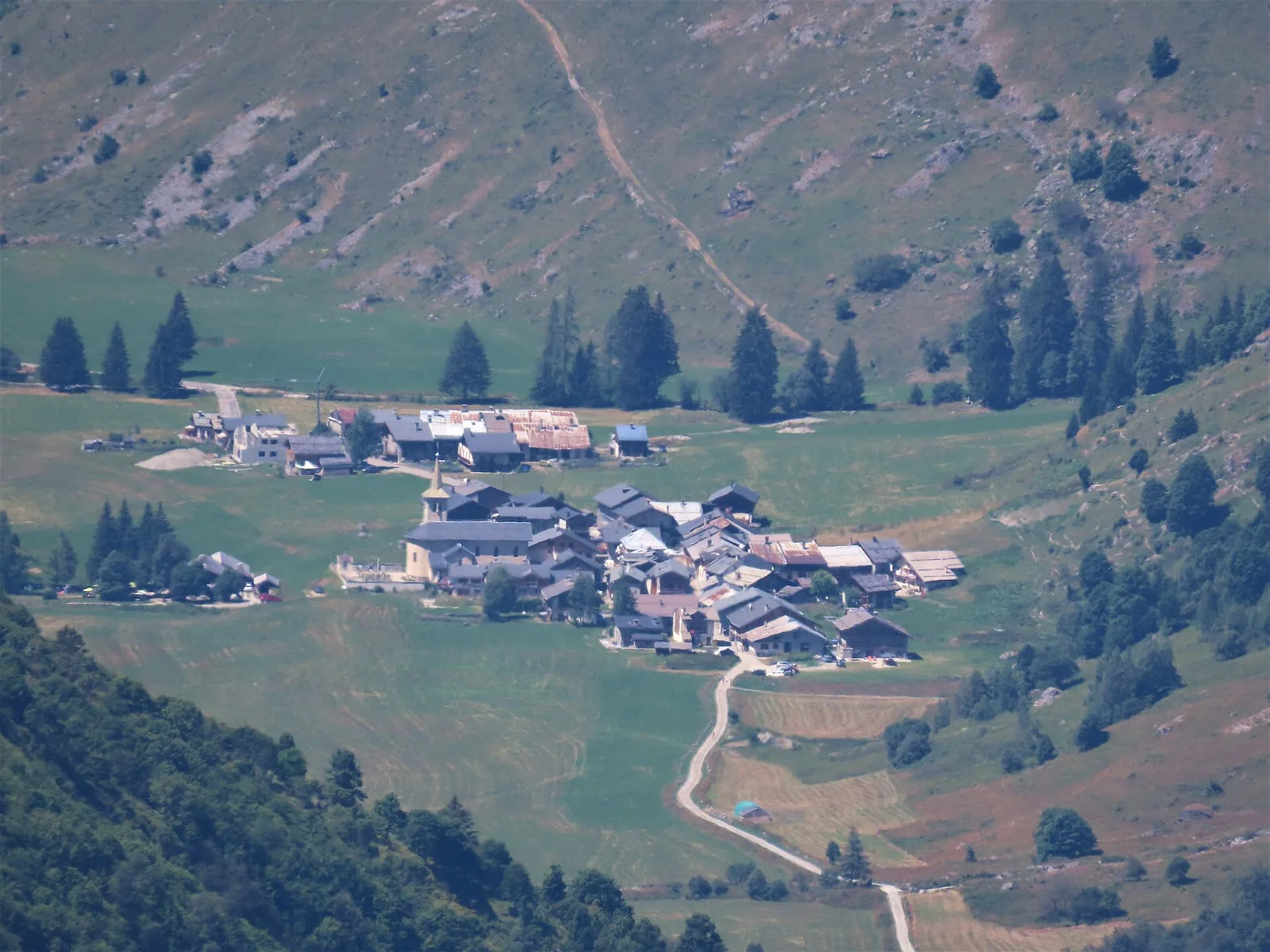
Glacier de l'Épéna above Champagny-le-Haut. · Photo: Rémih / Wikimedia Commons, CC BY-SA 4.0 (resized to WebP) Source
The Glière approach is a good choice to investigate when you want a mountain walk from Le Laisonnay without committing to a high pass. The ascent, return distance and weather still require a proper walking day. Decide separately whether you want to reach the refuge, continue toward the former lake, or arrange a night.
The approach from Le Laisonnay
The park lists the parking at Le Laisonnay as the usual start, at about 1,560 m, and the refuge at about 2,010 m. Its 1 h 30 walking estimate and 450 m ascent describe the uphill approach. Add time for the descent, pauses and any continuation above the hut.
Confirm road access before travelling to the start. Snow-season access and routes from other Vanoise valleys involve different terrain and planning; summer directions should not be reused as a winter itinerary. The hut operator warns that snowy access is neither marked nor secured.
What to expect at the former lake
The name Lac de la Glière can be misleading: the park describes a dry lake above the refuge. Treat the basin and surrounding mountain scenery as the attraction. A continuation toward interpretation points adds to the day, so choose the precise turnaround on a map rather than assuming every Glière-labelled walk has the same length.
For the larger route choice, use the Champagny hiking guide. Avoid treating the Col du Palet or another pass as a small optional extension to the refuge outing.
Check the operator before an overnight
The operator announces closure with reopening planned for June 2027. Other pages describe an unguarded period, so contact the operator before planning an overnight stay. Confirm whether shelter, meals and water will be available on your date.
The operator’s unguarded guidance warns of no catering, water or electricity, and no telephone coverage or emergency radio. A reservation notification does not systematically guarantee a bed. These limits make an unguarded stay a different undertaking from a summer half-board booking.
Park rules and the return
The refuge is in the protected Vanoise core. Read the park visiting rules, carry waste back down and observe wildlife from a distance. Bivouac permission depends on the designated refuge area and guarded season; it is not a way around a closure. Keep sufficient daylight and supplies for the return to Le Laisonnay.
Common questions
How long is the walk to Refuge de la Glière?
The park’s hut listing gives about 1 h 30 uphill from the Le Laisonnay parking, with around 450 m ascent. That is not the total return outing, and conditions or your pace can make it longer.
Is there a lake beside Refuge de la Glière?
The Lac de la Glière is a dry former glacial lake above the refuge. Plan for a landscape and interpretation visit, rather than an open-water lake or swimming outing.
Can I stay at Refuge de la Glière?
Check directly with the operator. On 21 October 2026 its homepage announced closure with reopening planned for June 2027, while other pages described unguarded arrangements. Neither a general listing nor this guide confirms a bed or current access.