Visit Vanoise National Park from Champagny
Champagny reaches Vanoise through the upper valley of Champagny-le-Haut. Le Laisonnay is a principal summer walking start; Glière lies in the protected core, while Plaisance sits at its edge. The whole valley is not one legal zone, so check the boundary and rules for the route you choose.
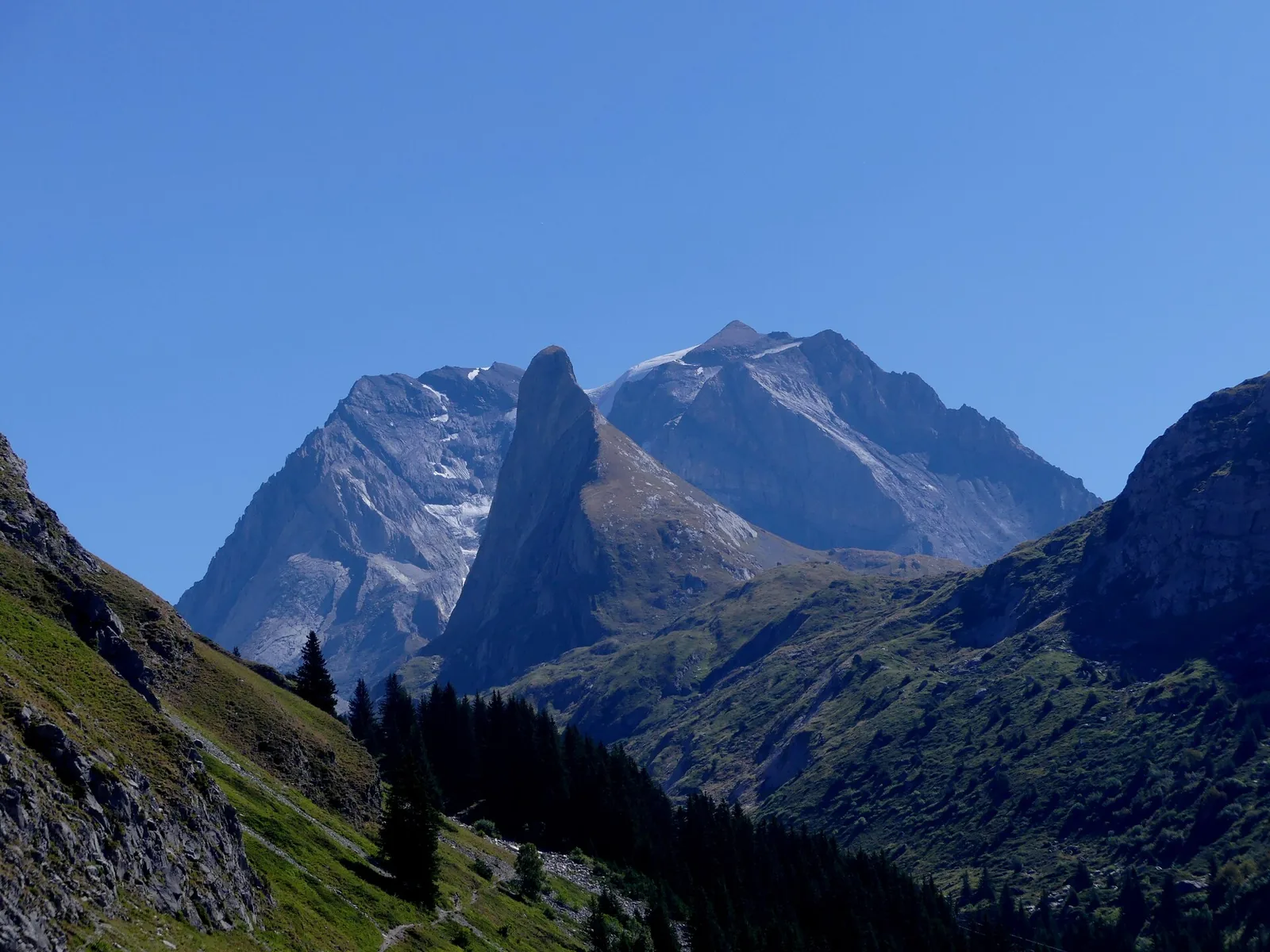
Grande Casse and Aiguille de la Vanoise. · Photo: Florian Pépellin / Wikimedia Commons, CC BY-SA 4.0 (resized to WebP) Source
Champagny is a practical gateway to a particular side of Vanoise, rather than a base from which every park landmark is a short excursion. Begin with the upper valley, choose a realistic walking objective and keep the protected-area rules attached to that exact route.
Start with the valley you can reach
Champagny-le-Haut gives the landscape context. Le Bois supports a shorter discovery day, while Le Laisonnay serves mountain approaches when seasonal road access permits. The winter road endpoint is different from the summer one; confirm access before fixing your itinerary.
For a first mountain day, compare Glière with Plaisance. A refuge objective allows a clear turnaround. Continuing over Plan Séry, toward the Col du Palet or onto an overnight circuit needs a separate route assessment and booking plan.
Recognise the protected core
The national park includes a strictly regulated core, with surrounding areas governed differently. A destination description saying “gateway to Vanoise” does not locate a legal boundary. Use the park map, entrance signs and marked boundary on the ground.
This distinction matters especially for dogs and bicycles. Ordinary pet dogs are banned in the core even on a leash or in a bag. Cycling permissions depend on designated routes and exceptions; use the mountain-bike guide rather than a hiking trace as a cycling route.
Rules that affect an ordinary visit
The park’s visitor guidance asks you to take rubbish back to the valley, leave plants and minerals in place, avoid feeding wildlife and keep noise down. Fires and drones are prohibited in the core. Watch wildlife from a distance and give working pastoral areas space.
For exact scope and any exceptions, read the current park rules. Keep a copy of your route available offline; reading the rules should be part of choosing the outing, before reaching the boundary.
Overnight plans need a named destination
Book a guarded refuge or a designated bivouac place, rather than assuming you can choose a tent spot on arrival. In the core, permitted summer bivouac is restricted to the immediate surroundings of certain guarded refuges and requires a reservation. It does not become legal everywhere after sunset.
A hut’s unguarded building arrangements do not prove safe trail access, water or catering. Check the operator directly and carry what your route requires. The hiking guide compares the main approaches without presenting this static page as a live conditions bulletin.
Common questions
Is all of Champagny-le-Haut inside the national-park core?
No. The classified upper valley and the national-park core are different designations. Read trailhead signs and consult the park map for the exact boundary.
Can I camp anywhere in Vanoise National Park?
No. In the core, summer bivouac is limited to designated areas beside certain refuges during guarded periods, with reservation required. Valley camping has separate local restrictions.
Which walk should I choose for a first Vanoise visit?
Choose according to your group: the Gorzdérés route introduces the valley; Glière or Plaisance adds a mountain ascent. A high pass requires more time and commitment than either refuge approach.