Refuge de Plaisance: route, effort and overnight stays
Refuge de Plaisance is reached from Le Laisonnay-d’en-Bas on a roughly 7 km return walk with 600 m ascent. The operator estimates 1 h 45–2 h uphill. The ascent is sustained near Cascade du Py; continuing to Col de Plan Séry makes a substantially longer, harder day.
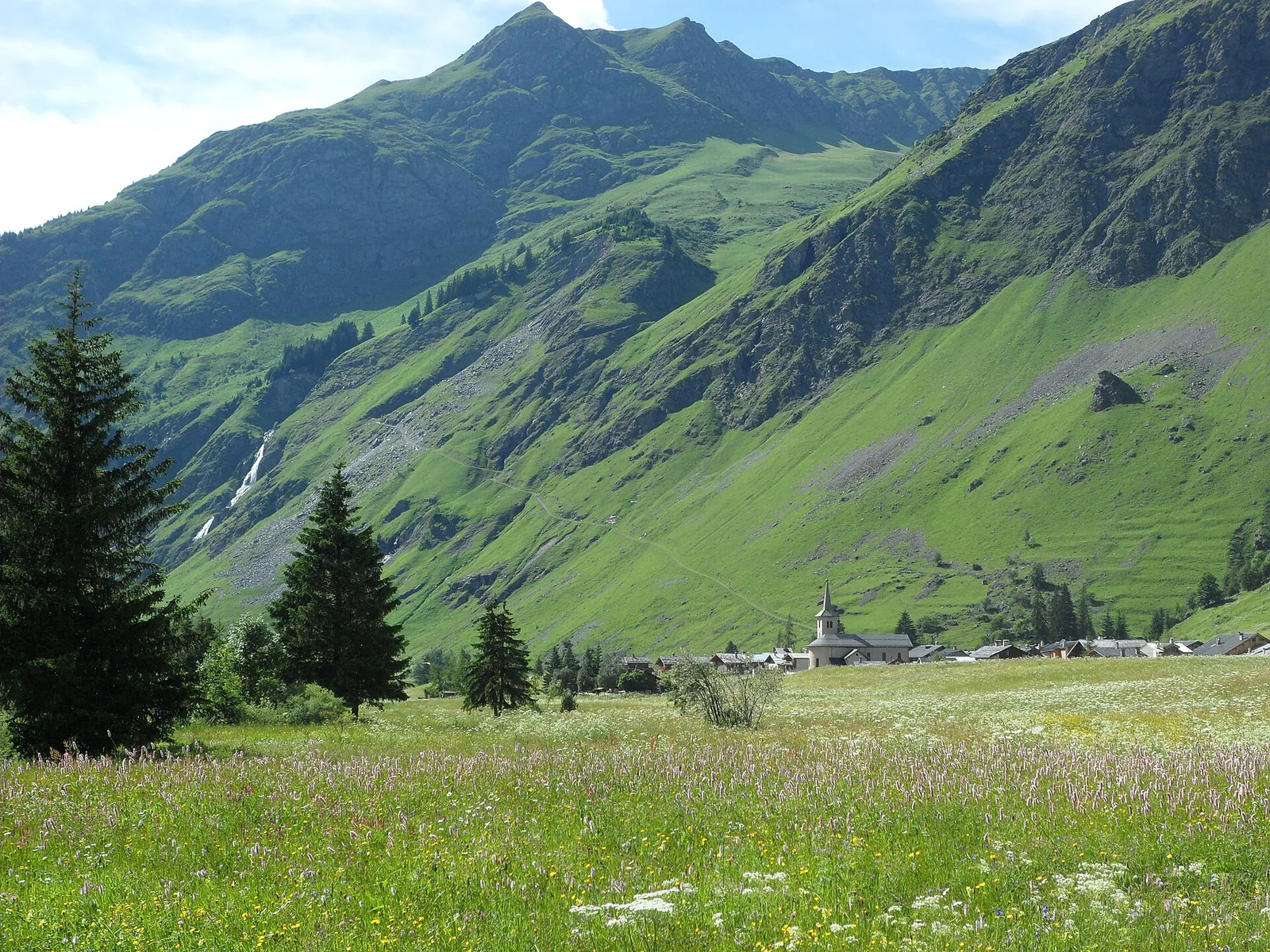
Champagny-le-Haut valley. · Photo: Cld303 / Wikimedia Commons, CC BY-SA 3.0 (resized to WebP) Source
Plaisance suits a deliberate refuge outing from Le Laisonnay. The steep start, open upper valley and return descent are the day’s main commitments. An overnight can divide the walking, but it adds booking and equipment needs rather than removing the mountain conditions.
The approach and return
The operator names Le Laisonnay-d’en-Bas parking as the start, at about 1,560 m. Its access page gives 7 km return, 600 m ascent and 1 h 45–2 h uphill, with around an hour for its return estimate. Add breaks and a realistic margin for your own group.
The path climbs in bends beside Cascade du Py before reaching the upper vallon. This is distinct from viewing the waterfall near the hamlet. Use the operator’s map and route description; do not attempt an improvised route along the water.
Road access to the trailhead is seasonal. Arrange the valley transfer and a return meeting point before you leave, particularly if staying in Champagny without a car.
Stop at the refuge or continue to Plan Séry?
For a first visit, making the refuge your turnaround gives a clear objective. Continuing to Col de Plan Séry adds another mountain section. The tourist office publishes the full col route as 12 km return, 1,080 m ascent and about 6 h 30, graded red/difficult.
Treat the col as a separate day plan with its own weather and snow assessment. The refuge is also the limit for a dog-accompanied approach: the operator says ordinary pet dogs may not continue beyond it into the protected core.
A guarded overnight
Use the refuge booking page to check the guarded calendar, choose meals and reserve. Ask about dietary needs and arrival arrangements ahead of time. Check current payment methods and bring the equipment requested for a shared dormitory. An afternoon meal stop and a reserved bed are separate services.
Outside the guarded season
The operator describes a self-service configuration with dormitory, cooking facilities and limited amenities, without an advance bed reservation system. Its guidance warns that winter access is difficult and avalanche-prone, with no mobile signal. An open building does not establish a suitable winter approach.
Read the current unguarded instructions before making that plan. For a summer comparison with the other valley refuge, see Glière; for the broader protected-area rules, use the Vanoise guide.
Common questions
How difficult is the Plaisance refuge walk?
The tourist office grades the refuge approach blue/moderate and gives about 600 m ascent. The operator describes a sustained initial climb. Match it to your fitness and current trail conditions; it is not a flat valley stroll.
Can I bring a dog to Refuge de Plaisance?
The operator permits the approach as far as the refuge and advises a leash around its animals. Beyond the refuge you enter the national-park core, where ordinary pet dogs are prohibited. Confirm overnight pet arrangements separately.
Can I book an unguarded night at Plaisance?
The operator’s unguarded guidance states that this period has no reservation system; payment afterward does not reserve a bed. Read the current instructions and prepare for an autonomous mountain stay.